Water softener and filtration, Murray County
Water Treatment in Chatsworth, GA
Hard water spots, orange stains, a bad taste, or a question about what is in your tap. Ryan installs whole-home filters, water softeners and under-sink systems.
Short answer: Treatment depends on what is in your water. A softener handles hardness. A filter handles sediment, taste or certain contaminants. The right choice starts with a test, not a guess.
- Who it is for: homes on city water and homes on a private well.
- Softener: for scale, spots, and soap that will not lather.
- Filter: for sediment, chlorine taste, or a specific problem named by a test.
- Not urgent: unless the water smells, looks cloudy, or you have a health concern. Then test first.
Start with the water you actually have
There is no one right system. A softener removes minerals that cause scale. A sediment filter catches grit. A carbon filter helps taste and smell. Some contaminants need a different kind of unit. Choosing before you know what is in your water is how people end up with the wrong equipment.
For a private well, a lab test is the first step. See our guide to well water testing in Georgia. For city water, you can read the utility's yearly water quality report, which tells you what it found in the water it delivers.
Our posts on filtration versus a softener and hard water effects explain the difference in plain terms.
If you are on Chatsworth city water
The Chatsworth Water Works Commission supplies town water, and it publishes a yearly water quality report. That report is the place to see what is in your city water before you pick a filter. A filter should solve a problem you can name, like taste, odor, hardness or staining, not a guess.
This is a utility matter, and it can change. Read the commission's current water quality report, or ask the utility directly, before you decide anything. A plumber cannot test your water for you, and a home unit is not a replacement for what the utility is required to do.
If you want a filter for drinking water, ask for one certified to a recognized standard. The EPA points to NSF/ANSI 53 for carbon units and NSF/ANSI 58 for reverse osmosis units. Certification matters more than the brand name.
Not sure which system you need?
Text Ryan what you see: stains, spots, taste, or a lab report. He can tell you what each type can and cannot do.
If you are on a private well near Chatsworth
A well home has no utility report. You are the one responsible for testing and treatment. Common problems in North Georgia wells are sediment, iron, hardness, and a sulfur smell. Our page on sulfur smell in well water goes through that one.
Ryan also installs well pumps and well pressure tanks, so he looks at the whole system: pump, tank, and where a filter should go. Putting a filter in the wrong place can cut pressure. See pressure dropped after a filter.
Septic and wells share the same land. Murray County Environmental Health is part of the North Georgia Health District, and it takes complaints about onsite sewage systems. If you suspect your septic system is affecting your well, a lab test is the way to know.
What Ryan installs and what he looks at
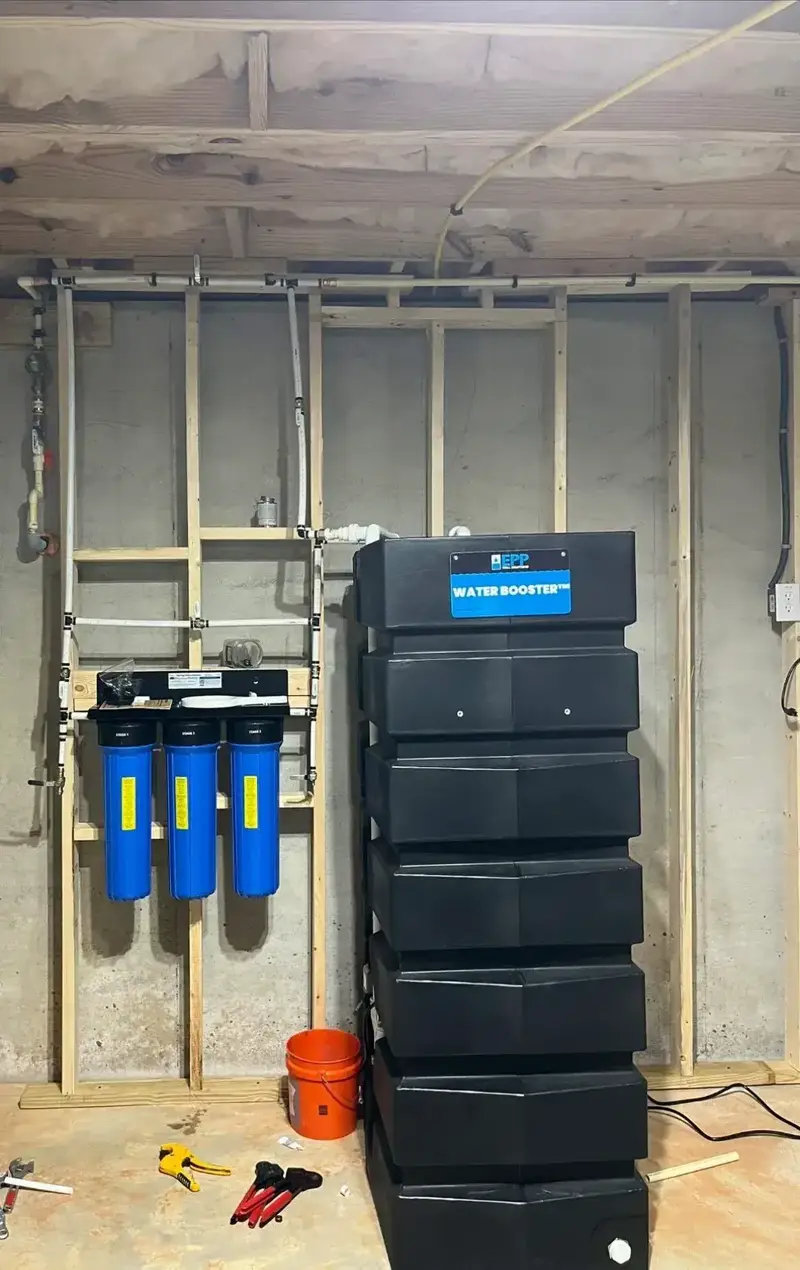
- Whole-home filtration, where the water enters the house
- Water softeners, with the brine tank and a drain connection
- Under-sink drinking water systems
- Sediment and carbon filter stages in a rack
- Bypass valves, so you can service the system without losing water
A softener needs a drain and a power outlet nearby, and a spot with room for salt. A whole-home filter needs room to change cartridges. Ryan looks at your basement, utility room, or crawl space before he quotes. The estimate is free, with no trip fee and no diagnostic fee.
Taking care of the system after it goes in
Filters need new cartridges on a schedule, which the maker lists. A softener needs salt. If a filter clogs, pressure drops at the faucets, and that is the sign to change it. Ryan can show you how, and which parts you can do yourself.
Ryan is based in Ellijay, about 30 miles from Chatsworth, and he comes to you. He prefers text. Send a photo of the unit and the label and he can tell you what you have.
“They installed our whole-house water filtration system perfectly. Ryan went above and beyond by carefully drilling through our brick and even patching the hole with masonry cement. Who does that? His attention to detail and professionalism were top-notch.”
Robert C., March 2025. 5.0 stars on Google.
Common Questions
Water Treatment Questions in Chatsworth
Should I get a softener or a filter?
It depends on the problem. Scale, spots and hard water point to a softener. Sediment, taste or a named contaminant point to a filter. A test tells you which.
Can Ryan test my water?
Ryan installs the equipment. For testing, use a lab. Georgia has guidance for well owners, and city customers can read the utility report.
Is my Chatsworth city water safe to drink?
That question is for the utility and its yearly water quality report, so read the current report and ask the utility. If you want an extra filter, ask for one certified to NSF/ANSI 53 or 58.
Do softeners work on well water?
Yes, for hardness. Iron, sulfur and sediment may need a filter first. Testing shows what is in your well.
Will a filter lower my water pressure?
A clean filter of the right size should not. A clogged one will. Ryan sizes and places the system with that in mind.
What does it cost?
The estimate is free and you know the price before any work starts. The price depends on the system and the home.
Better water at your Chatsworth tap
Call or text Ryan. Free estimate, no trip fee.