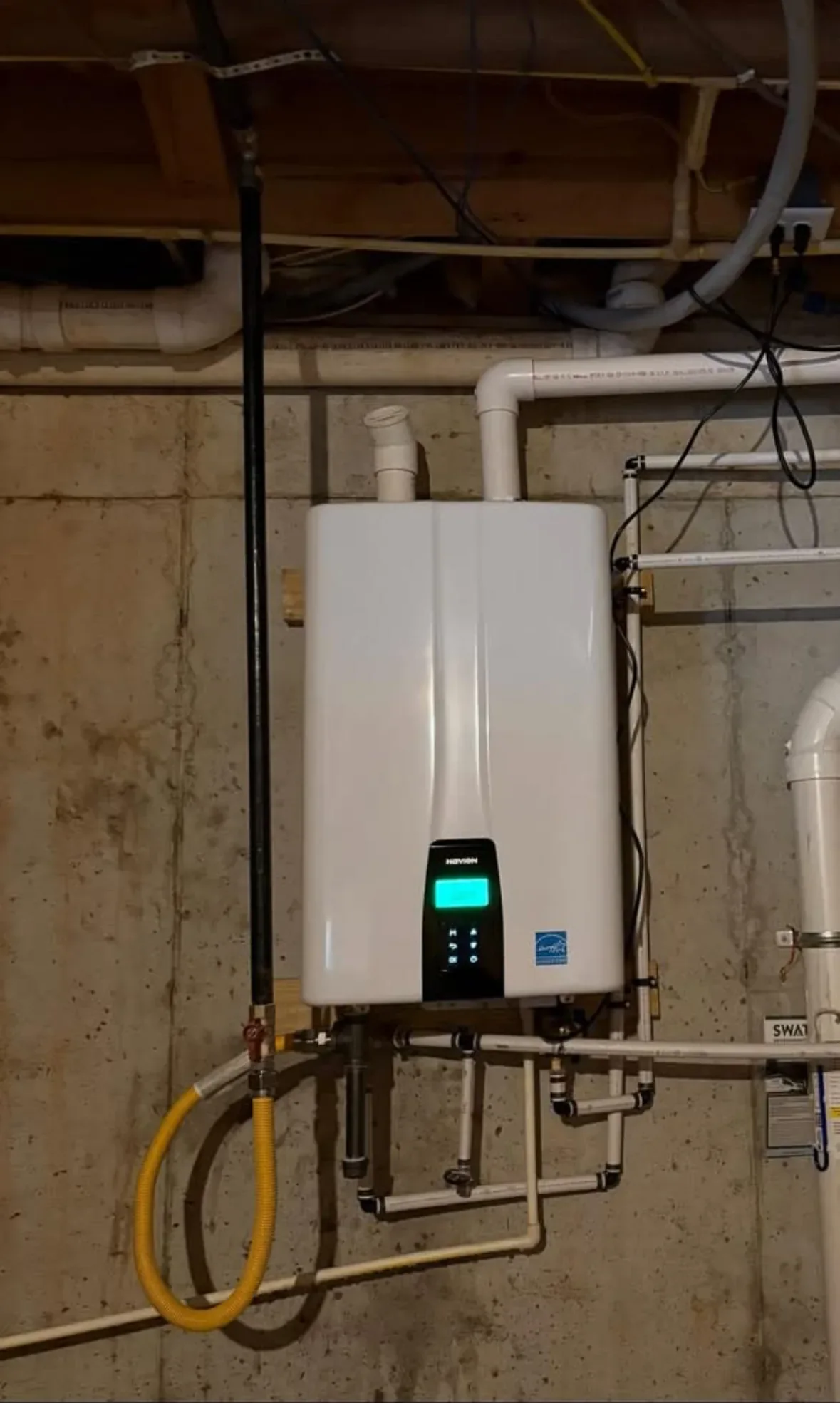
Short answer: Electric heaters need a 240 volt hardwired circuit and no vent. Gas heaters, natural gas or propane, need a gas line and a vent to the outside. Propane is a fuel for gas heaters, not a different kind of heater. The right pick depends on what your home already has, because switching fuels adds work and cost.
Already have a gas line or propane tank: a gas heater is usually the simplest swap.
No gas at the house: electric avoids a new gas line and a vent.
Power outages are common in the mountains: check which models still work without power.
Smell gas? Leave the house first, then call from outside.
What Each One Needs
Rheem says gas heaters need venting and gas lines, while electric heaters need 240 volt hardwired electric service. Electric models make no exhaust, so they do not need a vent. Gas models burn fuel, so the exhaust has to leave the house safely.
Rheem also says that gas costs less than electricity as a fuel, but electric units are more efficient. That is why the answer is not simply "gas is cheaper." What you pay depends on local fuel prices. For a propane home, ask your supplier for the current price per gallon and compare it with your power bill before you decide.
Where Propane Fits
Homes without a natural gas line often run on propane from a tank on the property. A propane water heater is a gas heater set up for that fuel. It still needs a vent and a gas line from the tank.
Propane and natural gas do not use the same line size. Rinnai gives an example for one 150,000 BTU per hour tankless model. On a half inch gas line, the longest run it allows is 70 feet for natural gas and 30 feet for propane. On a three quarter inch line, it is 300 feet for natural gas and 175 feet for propane. The takeaway is that a long run from the tank to the heater can call for a bigger pipe. Rinnai also says its units run on either fuel, and that it offers a limited field conversion program for most models.
Ryan installs and extends gas lines for both propane and natural gas. See gas line installation if the heater is the reason you need a new line.
Not sure which fuel your house is set up for?
Text Ryan a photo of your water heater and the pipe or wire that feeds it. He is a licensed Master Plumber and answers his own phone, day or night.
Mountain homes lose power, especially in ice and wind. Here is how each type behaves.
Electric tank: No power means no new heating. The hot water already in the tank stays usable for a while, but it will not be refilled with hot water.
Gas tankless: Rinnai says that when power fails, its tankless water heater will not operate. A gas line does not change that, because the unit needs power for its controls and fan. Rinnai sells an optional battery backup that can run a unit for multiple days.
Gas tank: It depends on the model. Some gas tanks do not rely on house power. Others have a fan or electronic controls that do. Look at the label or manual, or text Ryan a photo and he can tell you which kind you have.
A gas tankless heater has a gas line and vent pipes. An electric unit needs neither.
Venting and Carbon Monoxide
Any fuel-burning heater has to vent its exhaust to the outside. ENERGY STAR tells homeowners to have the installer decide how combustion gases will be vented, and to check whether power is available near the heater for models that use a fan. A bad vent can let carbon monoxide into the house, which you cannot see or smell.
Keep working carbon monoxide alarms near bedrooms if you have any gas appliance. Our page on carbon monoxide and gas appliances explains what to do. If you ever smell gas, leave the house first, then call from outside. The steps are on what to do if you smell gas.
Venting is also why moving a heater to a new spot is a bigger job with gas than with electric. A gas unit needs a path for the vent, and a new gas line if the spot is far from the old one.
Should You Switch Fuels?
Rheem says fuel switching is not recommended, and that it may need extra plumber or electrician work at the time of installation. That makes sense. Going from electric to gas means a gas line and a vent. Going from gas to electric means a 240 volt circuit, and the panel has to have room for it.
If a switch is on the table, get the whole job priced, not just the heater. Ryan gives a free estimate before any work starts, so you will know the full cost first.
You have gas or a propane tank and a gas water heater now: Staying with gas keeps the job simplest.
You have an electric heater and no gas at the house: Staying electric avoids a new gas line and vent.
You want tankless: It can run on gas or electric. Gas models need a vent and the right gas line. Rheem notes electric tankless units may need an electric panel upgrade, which can be expensive. See tank versus tankless for mountain homes.
You are building or changing the house plan: Decide the heater fuel early, before pipes and wires are set.
"Ryan was knowledgeable, courteous, and took the time to explain the issue and the best solution. What impressed me the most was their honesty and fair pricing, no hidden fees or unnecessary upsells. It's clear that The Village Plumber truly cares about their customers."
Cassie E.Google review, May 2025
Common Questions
Is a propane water heater the same as a natural gas one?
Close, but not the same. Both burn gas and both need a vent. They use different gas settings and different line sizes. Rinnai says its units run on either fuel and that a limited field conversion program exists for most models. Ask the installer to set the heater for the fuel you have.
Which is cheaper to run, gas or electric?
Rheem says gas costs less than electricity as a fuel, while electric units are more efficient. Your real cost depends on local prices. For propane, compare your supplier's price per gallon with your power rate.
Will my gas water heater work when the power is out?
It depends on the model. A gas tankless unit will not run without power, according to Rinnai. Some gas tanks do not need house power and some do. Check your label or text Ryan a photo.
Can I switch from electric to gas?
Yes, but it takes more than swapping the heater. You need a gas line, a vent and a safe spot for the burner. Rheem says fuel switching may need added plumber or electrician work. Ask for the full job to be priced first.
Do electric water heaters need a vent?
No. Rheem notes electric models make no emissions, and they have no flue. They do need a 240 volt hardwired circuit, which Rheem lists as the requirement for electric heaters.
What should I do if I smell gas near my water heater?
Leave the house first. Do not flip switches or use a phone inside. Call from outside, then call or text Ryan for the repair once you are safe. Steps are on our gas smell page.