Short answer: A water heater expansion tank soaks up the extra pressure that builds when water heats up in a closed plumbing system. You may need one if a check valve, backflow device or pressure reducing valve sits on your main water line.
Who needs one: homes where water cannot flow backward into the street or well line, so heated water has nowhere to expand.
Signs: a relief valve that drips, banging pipes, or dripping faucets after the heater runs.
Urgency: a dripping relief valve is not an emergency, but do not ignore it. A wet floor under the heater is.
Who decides: a plumber, based on your valves and local code.
If you looked at your water heater and saw a small tank on the pipes above it, that is an expansion tank. If you did not, you may wonder whether you are missing something. The answer depends on how your plumbing is set up, so this page explains how to tell.
Not sure if that small tank is working?
Text Ryan a photo of your water heater and the pipes above it. He answers his own phone.
Water expands when it gets hot. In an older plumbing system, the extra water simply pushed back into the street line. Today many homes have a one-way valve, a backflow preventer or a pressure reducing valve on the supply, so the system is closed. Water cannot flow backward, and pressure rises each time the heater cycles.
A thermal expansion tank is the fix. It has an air-charged bladder or diaphragm inside. When the water expands, it flows into the tank, and the air cushion takes the squeeze. When you draw hot water, the tank gives it back. The tank connects to the cold water pipe that feeds the heater, as manufacturers instruct.
What It Looks Like
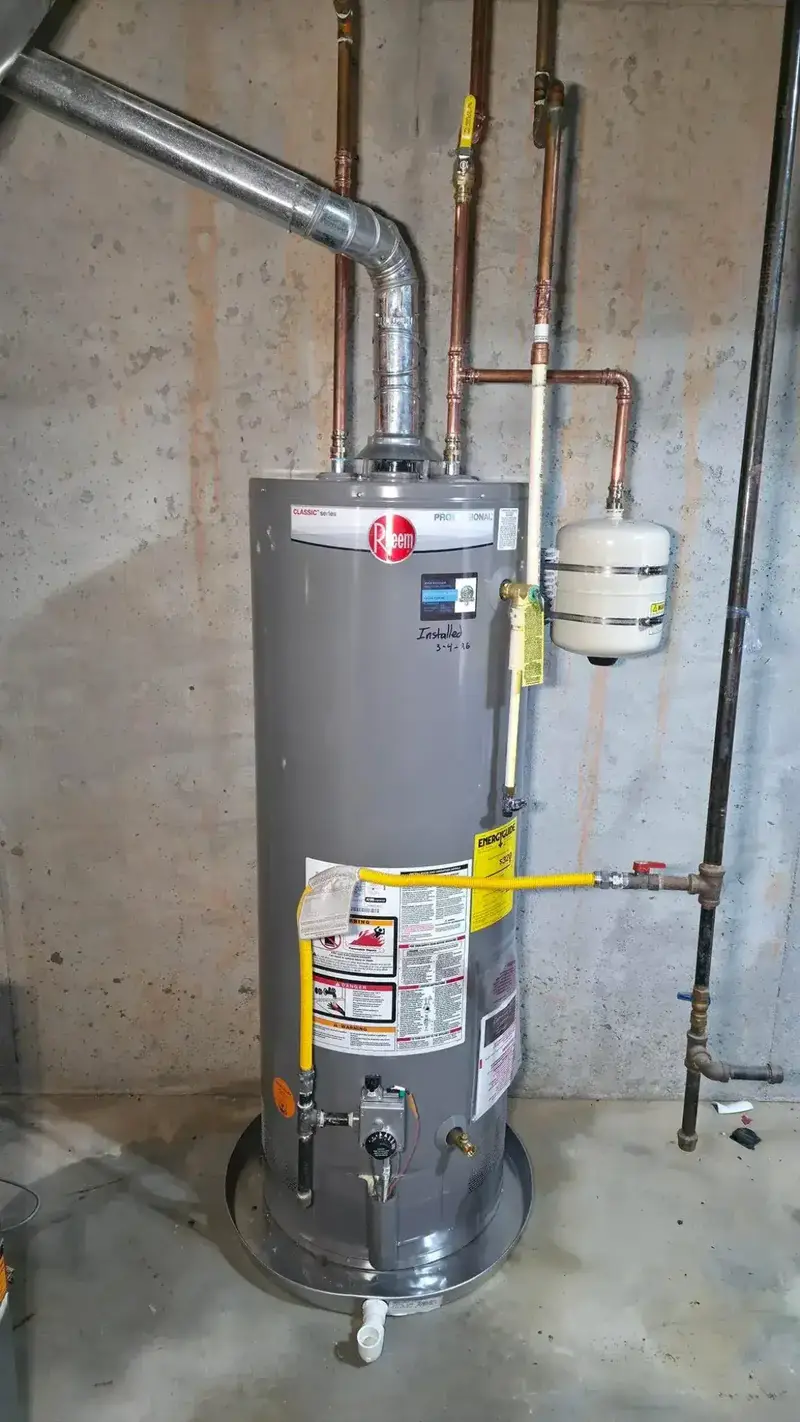
A tank water heater with an expansion tank mounted above it on the copper piping.
Most expansion tanks are small, shaped like a tall can or a ball. They hang from the pipe or sit upright on a fitting, and they have an air valve on the end, like a bike tire.
Signs You May Have a Pressure Problem
The relief valve drips or spits. When pressure rises too far, the heater's safety valve opens a little. Without a tank, the extra water spills out. Our maintenance checklist shows how to test that valve safely.
Pipes bang or thump when the heater finishes heating.
Faucets or toilet fill valves drip or fail early.
An existing expansion tank has gone bad. Tap it. The top should sound hollow. A tank that sounds full all the way down may have a failed bladder. A leak from the tank body or a dead air valve also points to replacement.
A pressure gauge that threads onto an outdoor hose spigot can show your pressure. If the reading climbs after hot water runs, that supports an expansion problem. If you are not sure how to read it, text Ryan a photo.
What About Homes on a Well?
Around Gilmer, Pickens and Fannin counties, many homes use a well pump and a pressure tank. The well pressure tank is a different tank with a different job. It stores water so the pump does not turn on every time you open a faucet. Our page on well pressure tank installation explains it.
A well pressure tank can sometimes give heated water a little room, depending on the layout. But if there is a check valve or other one-way device between the heater and the tank, the heater side can still be closed. A plumber has to look at the actual layout. Do not assume either way.
What About City Water?
Homes on a public water line often have a backflow preventer or a pressure reducing valve at the meter or main shutoff. That is a common reason a home on city water ends up with a closed system. Your water utility may add rules, so ask the utility or a plumber what applies where you live.
Expansion Tank or Relief Valve Alone?
A relief valve is a safety device, not a pressure fix. If the heater is dripping through its relief valve every day, that is a symptom. There are also thermal expansion relief valves sold as an alternative to a tank, and code in your area may allow one or the other. A plumber can say which suits your setup.
When a New Heater Is Installed
When Ryan replaces a water heater, he checks the supply side for valves and pressure and tells you whether the setup needs an expansion tank. He explains what he sees and gives you a free estimate before any work. Repair and replacement jobs typically run about $500 to $2,000 depending on the unit and the job. Read more on the water heater page.
Adding a tank to an existing heater is a common, small job for a plumber. It involves shutting off water, draining some of the line, setting the tank's air charge to match your house pressure, and checking for leaks. Skipping the charge setting is a common mistake, which is one reason to have it done right.
What a Customer Said
★★★★★
"Ryan was knowledgeable, courteous, and took the time to explain the issue and the best solution. What impressed me the most was their honesty and fair pricing, no hidden fees or unnecessary upsells. It's clear that The Village Plumber truly cares about their customers."
Cassie E.Google review, May 2025
Common Questions
Is a water heater expansion tank required?
It depends on your plumbing and local code. If a check valve, backflow preventer or pressure reducing valve closes your system, many plumbers add one. Ask a plumber to look at your actual setup.
Does a well pressure tank replace an expansion tank?
Not automatically. It is a different tank for a different job. Whether the pressure tank can absorb expansion depends on the valves between it and the heater.
My relief valve is dripping. Is that the expansion tank?
It can be. A dripping relief valve can also mean the valve itself is worn or the heater is overheating. Do not cap the pipe. Call or text Ryan.
How do I know if my expansion tank is bad?
Tap it. A hollow sound on top is normal. A tank that sounds full of water, leaks, or has no air at its valve usually needs replacing.
Can I install one myself?
It involves water, sometimes gas and heat, and a correct air charge. Most homeowners should have a plumber do it, and some areas require a permit. Check with your county or city.
Does a tankless heater need one?
Not usually in the same way, since tankless units do not hold hot water. Your maker's manual and your plumbing layout decide. See our tankless water heater page.