
Plumbing emergency? Burst pipe, no water, sewer backup. We respond day and night. Call or Text (706) 669-5727
Plumbing Problems
Air Spitting From the Faucet
A faucet that coughs, sputters, and spits before the water settles down means there is air in your water lines. On city water that is usually nothing. On a well, it is your system telling you something, and it is worth listening to.
Start Here: City Water or Well Water?
This one question changes the entire answer. Air in the lines on city water and air in the lines on a well look identical at the faucet. Same sputter, same spitting, same noise. They mean completely different things.
- City water: your water shows up already pressurized from a main under the road. Air only gets into that system when the main loses pressure and gets refilled, and it works its way back out on its own.
- Well water: your water gets pushed up out of the ground by a pump on your own property. A healthy well system has no air in it anywhere. So if air is coming out of your faucet, air got in somewhere, and the somewhere is what matters.
If you are not sure which you have, it is easy to settle. If you get a water bill from a utility, you are on city water. If you have a well cap somewhere in the yard and a pressure tank with a gauge and a pressure switch in the basement, crawlspace, garage, or well house, you are on a well. Out in the rural parts of Gilmer, Pickens, and Fannin counties, wells are common, so read the well section carefully.
On City Water, Air Usually Means Somebody Worked on the Main
Air gets into a pressurized municipal system when that system stops being pressurized. A crew repairs a break, flushes hydrants, replaces a valve, or does anything to a main upstream of you. The line drains, they refill it, and the air that got in has to come out somewhere. Your faucet is somewhere.
What it looks like: spitting and sputtering for the first few seconds at each tap, sometimes with cloudy or milky water. Here is the quick test for that cloudiness. Fill a glass, set it on the counter, and watch it. If it clears from the bottom of the glass upward, that is air bubbles rising out, and it is harmless. If it clears from the top down, or does not clear at all, you are looking at sediment, not air.
The fix is running water and a little patience. Start with the faucet closest to where the water enters the house and lowest in the house. Run it wide open for two or three minutes until it runs smooth and quiet. Then work outward and upward: kitchen, baths, tubs, showers, outside spigots. Flush each toilet a couple of times. Most city water air clears within a day. If you are still spitting air several days later and nobody has touched a main anywhere near you, then something on your side of the meter needs a look.
On a Well, Air in the Lines Is a Symptom
This is the part worth reading twice. A well system is closed. The pump sits down in the water, the drop pipe carries the water up, the pressure tank holds it, and the whole path from the pump to your kitchen sink is supposed to be full of water and nothing else. There is no place for air to come from in a system that is working.
So when a well faucet spits air, it is not a quirk of country living. Air got in, and there are only a few doors it can come through. Every one of those doors is a real problem, and every one of them gets worse and more expensive the longer it stays open.
The Four Things That Put Air in a Well System
- The water level in the well has dropped near the pump intake. During a dry stretch, after heavy use, or as a well ages and its recovery rate slows, the standing water level can be drawn down to right about where the pump is sitting. The pump keeps running and every so often gets a mouthful of air instead of water. The tell: it starts after you have been running water a while, during a long shower or a load of laundry, and it goes away after the well sits a few hours and recovers. That pattern is your well telling you the water is getting thin.
- A crack or leak in the drop pipe. The drop pipe carries water from the pump up to the top of the well. If it splits, or a fitting lets go, the column can drain back down. On a shallow well jet pump, where the pump sits above ground and pulls water up, it is worse: that line is under vacuum while the pump runs, so a crack does not drip water out, it sucks air in. That is the detail that fools people. They go hunting for a puddle and never find one, because on the suction side there is no puddle to find.
- A failing check valve. The check valve holds the column of water in the drop pipe once the pump shuts off. When it fails, that whole column drains back down the well between cycles. Open a tap and the pump has to refill the pipe before it can send you anything, and what was sitting in that empty pipe, air, arrives first. The tell: the sputter shows up after the system has been sitting, the first tap of the morning being the classic, and the pump seems to run more than it used to.
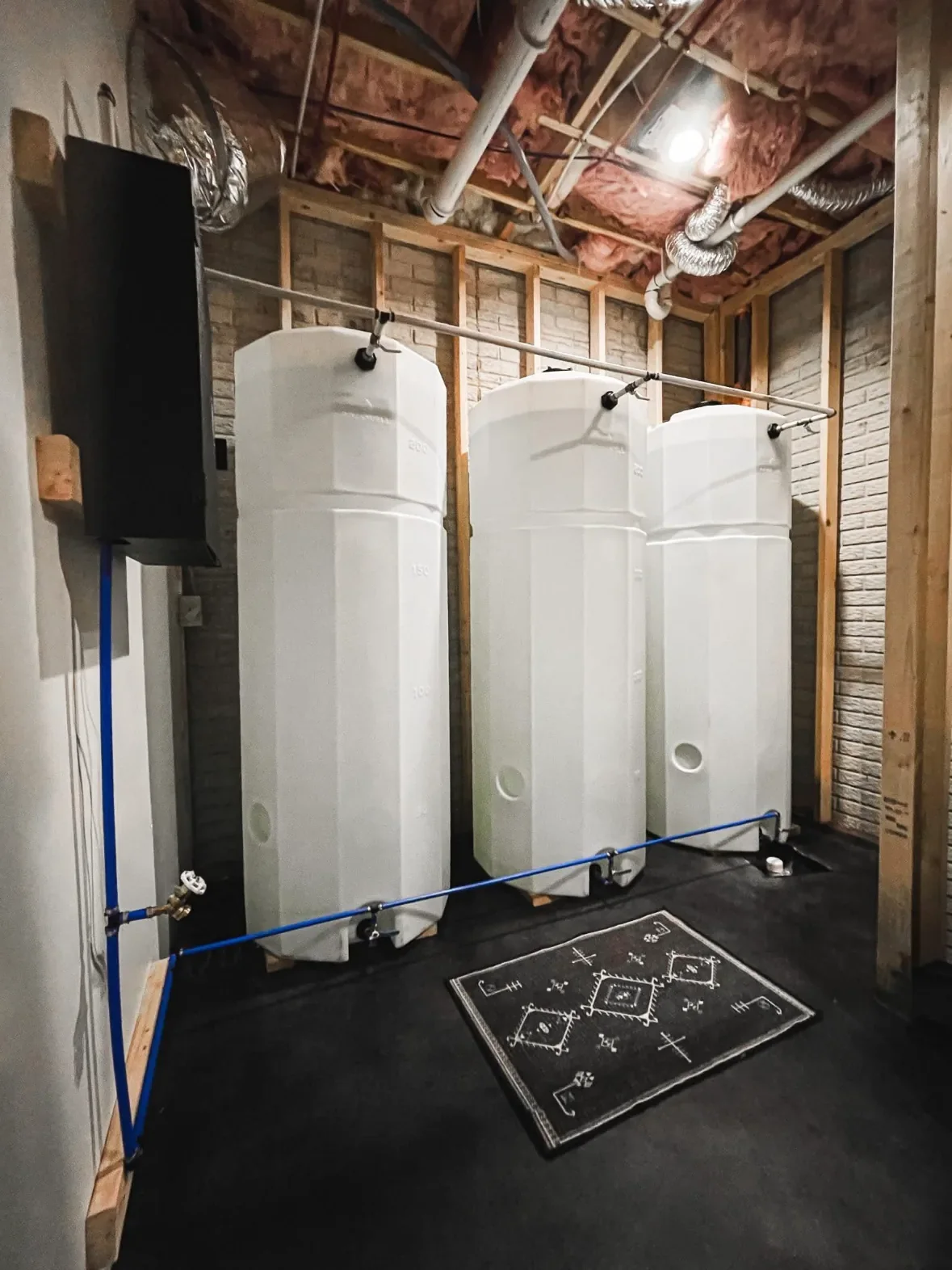
- The pressure tank has lost its bladder. Inside the tank, a rubber bladder separates a charge of compressed air from the water. That air charge is what pushes water to your faucets between pump cycles. When the bladder ruptures, the air and the water end up in the same space, the air gets pushed out into your lines, and it reaches your faucet as a slug. It usually shows up alongside short cycling, the pump clicking on and off every few seconds while you run one tap.
Why a Pump Pulling Air Is Expensive to Ignore
Here is the reason this page exists. A well pump is cooled by the water it moves. Not by a fan, not by the air around it. The water flowing past the motor is what carries the heat away, and on a submersible it is also what keeps the thrust bearing lubricated. When the pump gets air instead of water, even in short bursts, it is running dry. Running dry is what kills pumps. It is not the hours that wear them out, it is the dry hours.
So a well that spits air every so often does not stay at every so often. Each burst of air is a moment the motor is heating up with nothing carrying that heat away. Let that go for months and you are not fixing a check valve anymore, you are replacing a pump. Pulling a pump out of a well is a much bigger day than the repair would have been, which is the whole argument laid out in well pump repair vs. replacement.
Air does two other things worth knowing. It makes your pressure swing: you get pressure, then nothing, then pressure. At the faucet that reads as bad pressure, and plenty of people chase the pressure problem for weeks instead of the air problem causing it. And if the water level really has dropped near the intake, the step after spitting air is no water at all. Air is the warning you get before that.
The Honest Exception: Air After a Repair Is Normal
If somebody just worked on your plumbing, expect air and do not read anything into it. Any job where the system was opened and drained puts air in the lines: a water heater swap, a repipe, a fixture install, a pressure tank replacement, a pump pull, a burst pipe repair, or just shutting the main off to change a valve. Air fills the empty pipe. When the water comes back it pushes that air ahead of it, and it comes out of your faucets over the next few minutes to the next day.
Same story for a cabin or seasonal place that has been shut off and drained for the winter. The first time you turn the water back on it is going to sputter, and that is the system behaving exactly the way it should. Purge it and move on. What is not normal is air that keeps coming back a week later when nobody has touched anything. That is not leftover air. That is new air, and new air has a source.
Safe to Handle Yourself vs. Call Now
Purging air out of the lines is a homeowner job. Here is the whole thing:
- Start at the tap closest to where the water enters the house and lowest in the house. Run it wide open for two or three minutes, until it runs smooth and quiet with no coughing.
- Work through the rest of the house from there, ground floor before upstairs. Do not skip the tubs, the showers, the outside spigots, or the toilets. Flush each toilet twice.
- Do the glass test on any cloudy water. Clears from the bottom up means air, and air is harmless.
- Write down the pattern. Does it spit at the first use of the morning? Only after twenty minutes of running water? Only since somebody worked on the system? That pattern is most of the diagnosis, and it is the first thing Ryan is going to ask you.
- If you have a pressure gauge on the tank, note the pressure where the pump kicks on and where it shuts off. Two numbers, thirty seconds of work, genuinely useful.
Stop and call when any of these show up on a well:
- Sputtering that comes back after you have purged the lines properly.
- The pump clicking on and off rapidly while a single tap is running.
- Air along with pressure that swings, or with less water than you used to get before it quits.
- Air along with muddy, sandy, or gritty water. That is the well picking up things it should not be picking up.
- Water that stops entirely, even for a second.
The line is simple. Purging air is yours. Finding out where the air is coming from is not, because every one of the four answers is either down a well or sealed inside a tank, and guessing at it costs more than asking. If the spitting keeps coming back on a well, stop guessing. The pump is paying for the delay. Ryan is a licensed Master Plumber, Georgia License MPR108473, and he does the well pump, pressure tank, and water treatment work himself. Free estimate, no trip fee, no diagnostic fee. Call or text and describe the pattern you are seeing.
Common Questions About Air in the Water Lines
Is air in my water lines dangerous?
The air itself is not. Drinking water that came out cloudy with air in it will not hurt you, and cloudy water that clears from the bottom of the glass upward is simply air. What matters is why the air is there. On city water it is almost always harmless and temporary. On a well it points at something real, and that something can cost you a pump.
How do I get the air out of my pipes?
Open the tap closest to where the water enters the house and run it wide open for two or three minutes, until it runs smooth. Then work through the rest of the house, lowest fixtures first and upstairs last, including tubs, showers, and outside spigots. Flush each toilet a couple of times. If the air is left over from a repair or from utility work, that clears it out.
Why does my faucet only spit air sometimes?
The pattern tells you a lot. Spitting at the first tap of the morning, after the system has sat all night, usually points at a check valve letting the water column drain back down the well. Spitting after you have been running water a while points at the water level in the well dropping down near the pump. Spitting constantly, with the pump clicking on and off, points at the pressure tank.
Can a bad pressure tank cause air in the faucet?
Yes. The tank holds a rubber bladder that keeps an air charge separate from the water. If that bladder ruptures, the air and water mix and the air gets delivered to your faucet as a slug. It usually comes with short cycling, meaning the pump kicks on and off every few seconds while you run a tap. Replacing the tank fixes both at once.
Does air in the lines mean my well is going dry?
Not necessarily, but it is one of the possibilities and it is the one worth ruling out. If the sputtering only shows up after heavy water use and clears once the well rests a few hours, that is the pattern of a water level being drawn down near the pump. A check valve, a drop pipe leak, or a failed pressure tank all produce air too, and all three are cheaper to fix than a dry well. That is exactly why it is worth having somebody look instead of guessing.
Related Reading
- All plumbing problems, the full library of what goes wrong and what it means
- Well pump short cycling, when the pump clicks on and off every few seconds
- No water from the well, what to check when nothing comes out at all
- Low water pressure, the problem air in the lines often gets mistaken for
- Well pump repair vs. replacement, how to decide which one you are looking at
- Water treatment and well systems, pressure tanks, filtration, and pump work
Faucet Still Spitting Air?
Call or text and describe the pattern. Ryan answers himself and tells you straight whether it is worth a visit. Free estimate, no trip fee.