
Plumbing emergency? Burst pipe, no water, sewer backup. We respond day and night. Call or Text (706) 669-5727
Plumbing Problems
No Water From the Well
You turn the tap and nothing comes out. Not a trickle, not a sputter. On a well, that means something in your own system quit, and the cause ranges from a breaker that costs nothing to flip back on to a pump that has reached the end of its life. Here is how to find out which one you have, cheapest first.
On a Well, There Is No Utility to Call
A house with no water is not livable. No showers, no dishes, no laundry, and once the toilet tank empties, no flushing. Most people last about a day before they start packing a bag or calling around.
If you were on city water, you would call the utility and ask whether a main broke. On a well, that call does not exist. You own the whole system. The well, the pump hanging down inside it, the wire feeding that pump, the pressure switch, the pressure tank, and every foot of line running to the house. All of it is yours. Nobody is coming to look at it unless you ask them to. That is the real difference between well water and city water, and it is why working the diagnosis in the right order actually saves you money.
So work it from cheapest to most expensive. Do not start by assuming the pump is dead. It usually is not.
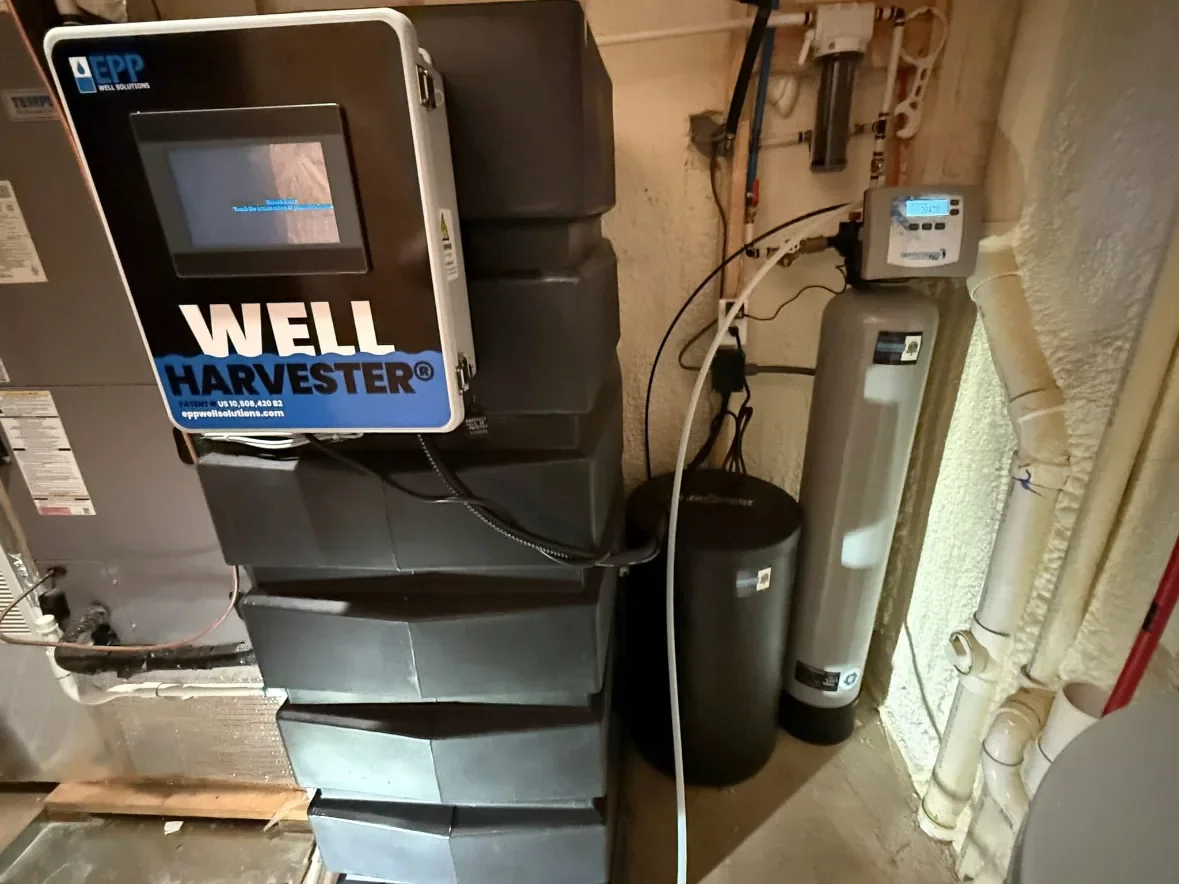
1. Power: The Cheapest Thing That Breaks
Go to the electrical panel and find the well pump breaker. It is usually a double-pole 240-volt breaker, twice the width of the others, often labeled WELL or PUMP. A tripped breaker does not always look obviously tripped. The handle can sit in a middle position that reads almost like ON at a glance. Push it firmly all the way to OFF, then back to ON.
Then find the pump's disconnect. It is often a small gray box on an outside wall, near the well head or near the pressure tank. Make sure it is switched on and that its fuses are intact.
A tripped breaker is the single most common cause of no water on a well, and it is the cheapest by a wide margin. Sometimes it is nothing worse than a lightning strike nearby or a power blip during a storm, which we get plenty of in these mountains.
Here is the part that matters. If you reset the breaker and it trips again right away, stop. Do not keep resetting it. A breaker that trips instantly is telling you there is a short, either in the pump motor itself or in the wire running down the well. Flipping it back over and over will not fix that, and it can damage the wire or the breaker in the process. That one is a call.
2. The Pressure Switch
The pressure switch is a small box with a gray or black cover, mounted on a thin tube near the pressure tank. It is the brain of the whole setup. It reads the pressure in your system, closes a set of electrical contacts to start the pump when pressure drops, and opens them to shut the pump off once pressure comes back up.
Those contacts are two small metal points that physically touch and separate every single time the pump cycles. Every time they separate under load they arc a little. Over years, they pit, corrode, and burn. Eventually they stop making contact at all. When that happens, the switch never calls for the pump, the pump never runs, and you have no water even though the pump itself is perfectly good.
A pressure switch is a small, inexpensive part. If this is your problem, it is one of the better outcomes on this list.
3. The Pressure Tank and What the Gauge Tells You
There is a round gauge on your pressure tank or on the piping right near it. Go look at it. That number narrows the problem down more than anything else you can do without tools.
- Gauge at or near zero, and you can hear the pump running: the pump is turning but not moving water. That points down the well, at the pump, the drop pipe, or the water level itself.
- Gauge reading normal pressure, but nothing at the tap: the pump side is doing its job. Whatever is stopping you sits between the tank and the fixture. A closed valve, or in winter, a frozen line.
- Gauge at zero and the pump is silent: go back to power and the pressure switch. Nothing is calling for the pump.
Most residential well systems are set to start the pump around 40 PSI and stop it around 60. Some run 30 to 50. Either range is normal. What matters is whether the number matches what the pump is doing.
While you are at the tank, note whether the pump has been kicking on and off rapidly in the weeks before this. That is a separate symptom worth understanding, and we cover it in well pump short cycling. A tank that has lost its air charge works the pump far harder than it should, which shortens the life of both the switch and the pump.
4. The Well Itself Can Run Low
This one surprises people. Your pump does not sit on the bottom of the well. It hangs at a set depth, and it can only pull water that sits above its intake. In a dry stretch, the water table drops. If it drops below where that pump is hanging, the pump has nothing to grab.
The tell is distinct. The water does not just quit. It sputters, spits air, runs weak, and then stops. Leave it alone overnight and it comes back. That is the well recovering, water seeping back in through the rock over hours until the level rises above the pump intake again. Then you use it in the morning and draw it right back down. If you are seeing air at the fixtures, read air spitting from the faucet, which walks through the other things that put air in a line.
If that overnight pattern sounds like your house, the pump is probably fine and the well is the issue. The answers there are different: lowering the pump if there is usable depth below where it hangs now, or in some cases going deeper. That is a real conversation, not a quick fix, and it starts with knowing your well's depth and the pump's setting depth. If you still have the original well report or the pump paperwork, dig it out before we come. It saves guesswork.
5. The Pump Itself
Pumps do not last forever. A submersible pump lives down in the well, underwater, and runs every time anyone in the house opens a tap. It is a motor doing hard work for years on end. It wears out.
The frustrating part of a submersible is that it usually gives you no warning. There is no squeal, no puddle on the floor, no slow decline you can watch coming. It works, and then one day it does not. And you cannot go look at it, because it is hanging a couple hundred feet down a six inch hole in the ground.
That is exactly why the order on this list matters. Everything above the pump is cheaper and faster to check, so we check it first. When we do get to the pump, it can be tested electrically from the top without pulling it: checking continuity and resistance across the motor windings, and testing the drop wire for a fault. That tells us whether the pump is genuinely dead or whether we are chasing something above it. If it is dead, the next question is repair or replace, and we walk through how that call gets made in well pump repair vs replacement.
6. In Winter, Suspect a Frozen Line
North Georgia gets genuinely cold, and elevation makes it colder. The line from the well head to the house is buried, but it does not stay buried the whole way. It comes up somewhere: at the well head, into a crawlspace, through a pit. Those transitions are where lines freeze.
Cabins are the classic case. A place sits empty for a few weeks with the heat off or turned way down, a cold snap moves through, and the line freezes solid. The owner drives up on a Friday night to no water and assumes the pump died. Often it did not.
The giveaway with a frozen line is that nothing is wrong electrically. The gauge reads normal pressure, the pump is not running because the system is holding that pressure just fine, and still no water reaches the tap. The water simply cannot get through the ice.
If it froze, it may also have split. Water expands as it freezes and pushes the pipe wall past what it can take. Sometimes the crack does not reveal itself until the ice thaws and the line comes back under pressure, and then you have a leak on top of everything else. If you thaw a line and water starts running somewhere it should not, shut the pump breaker off and call. More on that in frozen pipes.
Safe to Handle Yourself vs. Call Now
The line here is clean, and it is worth respecting. Almost everything on the diagnostic side is safe. Almost everything on the repair side is not.
Go ahead and do these yourself:
- Flip the well pump breaker fully OFF, then firmly back ON. Once.
- Check that the disconnect box near the well or the tank is switched on.
- Read the pressure gauge and write the number down. It is the most useful thing you can tell us on the phone.
- Note the pattern. Did the water quit all at once, or sputter and spit air first? Does it come back overnight?
- Check whether it is one fixture or the entire house.
- In a freeze, check whether the gauge still reads normal pressure.
This is where it stops:
- If the breaker trips again the second you reset it, leave it off. That is a short, and repeated resets push current into a fault.
- Do not open the control box. It holds capacitors that can carry a charge even after the power is off.
- Do not take the cap off the well. That is your drinking water, open to whatever falls in.
- Do not touch the wiring at the pressure switch. Those contacts are live at 240 volts.
- Never try to pull a pump yourself. A submersible on a couple hundred feet of pipe and wire, full of water, is far heavier than people expect. Lose your grip and it drops to the bottom of the well, and now you have a much worse and far more expensive problem than the one you started with. Pulling a pump is a licensed job with the right equipment, every time.
Anything below the well cap, inside the control box, or on the wiring is licensed work. Ryan Chastain is a licensed Master Plumber, Georgia license MPR108473, he installs well pumps and pressure tanks, and he answers the phone himself. If you are out of water right now, that is an emergency and we treat it like one. See emergency plumbing or just call or text and describe what you are seeing. The estimate is free, there is no trip fee, and there is no diagnostic fee. We answer 24 hours a day, because a house with no water does not wait until Monday.
Common Questions
Why did my well pump stop working all of a sudden?
Most often it is power. A tripped breaker at the panel is the most common cause and costs nothing to check, so start there. A pressure switch with burned contacts is next. An actual dead pump is further down the list, even though it is where most people look first. Submersible pumps do fail without warning, but they fail less often than a breaker trips.
How do I know if it is the pump or the pressure switch?
The pressure gauge narrows it down. If the gauge sits at zero and you cannot hear the pump running at all, the problem is on the electrical side: the breaker, the disconnect, or the pressure switch. If you can hear the pump running but the gauge stays at zero, the pump is turning without moving water, which points down the well. A plumber can test the motor windings and the drop wire from the top without pulling the pump.
Can a well run out of water and then come back?
Yes, and it is common in a dry stretch. Your pump hangs at a set depth and can only pull water sitting above its intake. When the water table drops below that point, the pump runs dry. You get sputtering and air at the faucet, then nothing. Leave it overnight and water seeps back in, the level rises, and it works again in the morning until you draw it back down. That pattern points at the well, not the pump.
How much does it cost to fix no water from a well?
It depends on what actually failed, and nobody can honestly quote that over the phone without looking. A pressure switch is a small repair. A pump replacement is a much bigger one. That is why the estimate is free and there is no diagnostic fee. We find the real cause first, then you get a real number instead of a guess.
Is it safe to keep resetting the breaker?
No. One reset is reasonable, since a storm or a power blip can trip a breaker with nothing else wrong. But if it trips again immediately, stop and leave it off. An instant trip means a short in the pump motor or in the wire running down the well. Repeated resets push current into a fault, which can damage the wire or the breaker and does nothing to fix the cause.
Keep Reading
Related Problems and Guides
- Emergency Plumbing: no water, burst pipes, and sewer backups, 24 hours a day.
- Well Pump Short Cycling: when the pump kicks on and off every few seconds.
- Air Spitting From the Faucet: what puts air in a well line and what it means.
- Frozen Pipes: thawing a line safely and what to check afterward.
- Well Pump Repair vs. Replacement: how that decision actually gets made.
- All Plumbing Problems: the full library of symptoms and fixes.
Out of Water Right Now?
Call or text. Ryan answers himself, day or night. Free estimate, no trip fee.