
Plumbing emergency? Burst pipe, no water, sewer backup. We respond day and night. Call or Text (706) 669-5727
Plumbing Problems
Well Pump Keeps Turning On and Off
A pump that clicks on and off every few seconds is not just noisy. It is wearing itself out fast. This is called short cycling, and the cause is usually the pressure tank sitting next to the pump, not the pump itself.
What Short Cycling Actually Means
A well pump is supposed to run in long, steady cycles. You open a tap, pressure in the system falls, the pressure switch closes at the cut-in point, and the pump runs for a minute or two until it pushes pressure back up to the cut-off point. Then it shuts down and stays off until you draw enough water to bring the pressure back down again.
Short cycling is that whole sequence crushed into seconds. The pump kicks on, runs for two or three seconds, snaps off, then kicks on again. You hear it as rapid clicking from the pressure switch or a rhythmic thumping out at the pump house. Run one shower and it may cycle 20 or 30 times before you are done.
Here is the part most people miss: the pump is doing nothing wrong. It is following the pressure switch exactly as designed. What has failed is the system's ability to hold pressure between cycles.
The Pressure Tank Has Lost Its Air Charge
Nine times out of ten, short cycling traces straight back to the pressure tank. To see why, you have to know what that tank is actually for. It is not a storage tank for water. It is a storage tank for pressure.
Inside a bladder tank there is a rubber bladder with water on one side and a sealed cushion of compressed air on the other. Air compresses. Water does not. When the pump runs, it forces water into the bladder, and the bladder squeezes that air cushion into a smaller and smaller space. The compressed air is what builds pressure and eventually trips the switch to shut the pump off. Later, when you open a tap, the air pushes back and drives water out into the house while the pump stays off entirely.
That cushion is the whole reason a well system works. On a healthy tank it holds enough water in reserve that you can wash your hands, flush a toilet, or fill a glass without the pump ever starting.
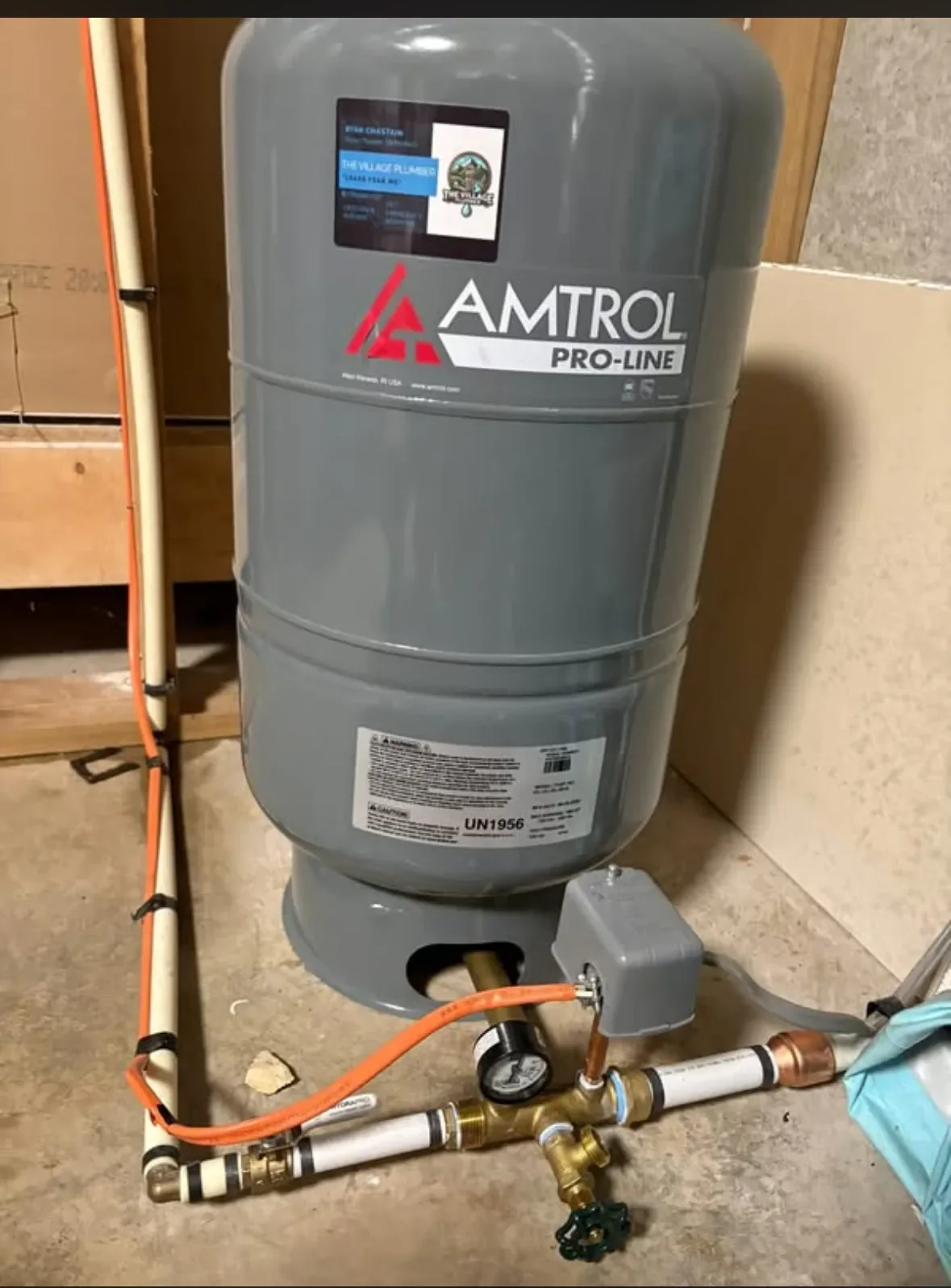
Now take the air away. If the bladder ruptures, or the charge slowly bleeds out past a leaking valve, the tank fills with water and there is nothing left to compress. Plumbers call this waterlogged. The pump switches on, and with no air to absorb the volume, pressure rockets to the cut-off point almost instantly and the pump shuts off. Open a tap and that pressure collapses just as fast, because no cushion is holding it up. Cut-in, cut-off, cut-in, cut-off, every few seconds, for as long as you run water.
Why This Wrecks the Pump
Short cycling is not a noise you can learn to live with. It is a countdown.
The hardest moment in a pump motor's life is the instant it starts. Startup current runs several times the motor's normal running amperage, and all of that extra heat lands in the windings. A motor that runs two minutes has time to move water past itself and carry that heat away. A motor that runs two seconds does not. It takes the hit, shuts off, then takes it again.
A submersible pump is rated for a number of starts, not a number of hours. Manufacturers publish maximum starts per day for exactly this reason. A pump on a healthy system might cycle a couple hundred times a day. A short-cycling system can burn through that in an afternoon. Windings cook, control box components fail, and bearings wear out years early. The pump that should have lasted a decade quits, and then you have no water from the well at all.
Here is the sting: a pressure tank sits in your pump house or basement where anyone can reach it. A submersible pump sits at the bottom of the well and has to be pulled, which drags the pipe and the wire up with it. Leaving a bad tank alone turns a component swap into a well job. If your pump is clicking today, every day you wait spends part of what is left of it.
How to Tell If Your Tank Is Waterlogged
Two checks. Both are safe, both take about a minute.
Tap the tank. Knock on it with your knuckles from the bottom up, the way you would check a propane cylinder. A healthy tank rings hollow near the top where the air is and sounds dull and solid near the bottom where the water is. You can usually hear the exact line where it changes. On a waterlogged tank that line is gone. It sounds solid and dead all the way to the top, because it is full of water.
Check the air charge. There is a schrader valve at the top of the tank, the same valve stem as on a car tire. With the system depressurized, a tire gauge on that valve should read about 2 PSI below your pump's cut-in pressure. On a 30/50 system that is roughly 28 PSI. On a 40/60 system, roughly 38 PSI. The depressurized part matters: check it with the system under pressure and the number you get is meaningless. If the gauge reads far below target, the charge has bled off. If water sprays out of the schrader valve instead of air, the bladder is torn and the tank is finished. No amount of recharging fixes a ruptured bladder.
One more free clue: watch the pressure gauge on the system while a tap is running. On a healthy tank the needle sweeps slowly between cut-in and cut-off. On a waterlogged tank it snaps between the two like a windshield wiper.
When the Tank Checks Out Fine
If the tank rings hollow and holds a correct charge, look elsewhere. Three suspects, in the order we usually find them.
- A clogged or failing pressure switch. The switch is the small covered box mounted on the pipe near the tank, and it is the part that physically turns the pump on and off. The contacts inside pit and burn over time. The small port that feeds system pressure to the switch can also plug with iron or sediment, which is common on well water in these mountains. A plugged port means the switch is reading a pressure that does not match reality, so it snaps back and forth.
- A leak in the drop pipe or a bad check valve. The drop pipe carries water from the submersible pump up the well, and a check valve holds that column of water up when the pump shuts off. If the check valve fails or the drop pipe splits, pressure bleeds backward down the well the moment the pump stops. Pressure falls, the switch calls for the pump again, and you get cycling that looks exactly like a bad tank. The tell is simple: it cycles even when nobody in the house is using water.
- A plugged pump screen. Sediment, iron, and mineral scale foul the screen on the pump intake. The pump cannot pull enough water to keep up, so it builds pressure in short bursts and cycles. This one usually shows up alongside other symptoms, like air spitting from the faucets, weak pressure through the whole house, or grit in the aerators.
Iron and mineral content runs through all three of those. Well water in North Georgia tends to be high in both, and it plugs switch ports, coats screens, and shortens the life of everything downstream of the well. If we are already pulling a tank or a pump because of it, that is usually the honest moment to talk about water treatment and filtration, because the same water is doing the same thing to your fixtures and your water heater.
Safe to Handle Yourself vs. Call Now
Straight answer on where the line sits.
Safe to do yourself:
- Tap the tank and listen for the hollow-to-solid line
- Watch the system pressure gauge while water runs and see how fast the needle moves
- Read the schrader valve with a tire gauge, on a depressurized system
- Note whether the pump cycles when no water is running anywhere in the house. That one observation narrows the problem a lot, and it is the first thing Ryan will ask you.
Call a licensed plumber for:
- Recharging or replacing the pressure tank. The tank has to be isolated and drained correctly, and the charge has to be set against your actual switch settings. Set it wrong and you either keep cycling or you chew up the new bladder.
- Anything involving the pressure switch, the pump, or the well itself. That is licensed work, and pulling a pump is not a one-person job.
- Anything inside the control box. Do not open it. That box carries live 240 volt power, and a well pump control box holds a capacitor that can stay charged after you shut the breaker off. This is the one item on this page with no gray area. Do not work in the control box.
Ryan Chastain is a licensed Master Plumber, Georgia license MPR108473. He installs well pumps and bladder tanks, he answers the phone himself, and he often does the work himself. Estimates are free, there is no trip fee and no diagnostic fee, and the workmanship is guaranteed on every job. If your pump is clicking right now, text is the fastest way to reach him. Cell service is thin in a lot of the country we cover, and a text gets through where a call drops.
Common Questions About Short Cycling
How long can a well pump keep short cycling before it fails?
There is no safe number. The damage adds up, and how fast depends on the cycle rate, the age of the pump, and how hot it is already running. A pump clicking every few seconds is doing days of wear in hours. If it is cycling with no water running, shutting the pump breaker off until someone can look at it stops the damage, though it also leaves you without water. Either way, this is a call now problem, not a next month problem.
Can I just add air to the pressure tank myself?
If the bladder is still intact and the charge simply bled off, air is part of the answer. But the reading has to be taken with the system depressurized, and the charge has to be set against your actual cut-in pressure, not a generic number off the internet. And if air went out, something let it out. That is usually a leaking valve or a bladder that is starting to go. A tank that needs air every few months is telling you it is finished.
Is it the tank or the pump?
They fail differently. A waterlogged tank causes fast cycling, but the pump still makes normal pressure while it runs. A failing pump usually shows up as weak pressure, air spitting from faucets, or no water at all. The two get tangled together because a bad tank left alone long enough kills the pump, and then you have both problems. If yours is already at that stage, read our guide on well pump repair vs replacement.
Does the size of the pressure tank matter?
It matters a lot. A bigger tank holds more drawdown, which means fewer pump starts, which means a longer pump life. Plenty of houses are running the smallest tank that fit the budget the day it went in, and that is one reason pumps around here die early. Sizing the tank against your actual pump is part of doing the job right.
What does it cost to fix a short-cycling pump?
It depends on whether it is the tank, the switch, or the pump, and those are very different jobs. Ryan gives you a free estimate after he sees the system. No trip fee, no diagnostic fee, no guessing at a number over the phone before he knows what he is looking at.
Keep Reading
Related Problems and Services
Pump Clicking On and Off?
Call or text. Ryan answers, and the estimate is free.