A popping, rumbling or banging water heater is nerve-wracking, especially at night. Most of the time it is a slow problem, not an emergency. Here is how to tell which kind you have.
Short answer: A popping or rumbling tank is most often sediment on the bottom of the tank. Water trapped under that layer heats up, turns to steam and bursts through it. It is usually a maintenance problem, not an emergency.
Popping, rumbling or crackling: usually sediment. A flush is the usual first step.
Whistling or screeching: often a blocked vent or blower on a gas unit, or a bad element on an electric one.
Banging when a tap shuts: usually water hammer in the pipes, not the heater itself.
Call or text Ryan now if you see water around the tank, rust-colored hot water, or a relief valve dripping or spitting.
What Each Water Heater Noise Usually Means
The sound tells you where to look. Manufacturers such as A. O. Smith describe the same short list, and it matches what plumbers hear in the field.
Popping, rumbling or a sound like popcorn. Sediment settles on the bottom of the tank. Water gets trapped under it, boils, and the steam bubbles pop as they push up through the layer. The sediment also makes the heater work harder to heat the water.
Crackling. Often the same sediment. It can also come from small beads that form when an aluminum anode rod reacts with chlorine in the water.
Whistling, screeching or a high squeal. On a gas unit with a blower, a dirty blower wheel or a blocked vent can do it. On an electric unit, a failing heating element can whine.
Humming or buzzing. A loose part vibrating, or an element or burner problem.
Banging or knocking when you shut off a tap or the washer stops. That is water hammer: moving water slamming into a closed valve. The heater is just where you hear it.
A hiss or sizzle is a different story. If it comes with drips, wet rust or puddles near the base, go to water heater leaking first.
Why Sediment Builds Up Faster Here
Every tank collects some minerals over time. The more minerals in your water, the faster the layer grows. Many homes around Ellijay and the surrounding mountains run on a private well, and well water is not treated the way city water is, so it can carry more minerals and grit into the tank. A home on a well that has never had its heater flushed is the classic popping tank.
Sediment is not just noise. The layer sits between the burner or element and the water. The heater burns more fuel or power to do the same job, the metal on the bottom runs hotter than it should, and over the years that is hard on the tank. Noise is the early warning.
Want a second set of ears?
Text Ryan a short video of the noise and a photo of the tank and its label. He is a licensed Master Plumber and answers his own phone, day or night.
If the noise is popping or rumbling and there is no water around the tank, you have time. These steps are safe for most homeowners.
Look at the base and the floor. Dry is good. Wet, rusty or stained means stop and read the leaking page linked above.
Check the relief valve. The temperature and pressure relief valve is the lever with a pipe running down the side of the tank. It should be dry. If it is dripping steadily or spitting hot water, call.
Turn the temperature down a notch if it is set very high. A very hot tank makes more noise and wastes energy.
Listen for when it happens. Noise only while it is heating points to sediment. Noise when a tap shuts points to water hammer.
Plan a flush. A. O. Smith says to flush the tank at least once a year. Turn off the gas or power first, hook a hose to the drain valve at the bottom, and run it to a safe drain or outside. The hot water that comes out can scald, so keep kids and pets away.
If you are not comfortable with a hose, a gas valve or a breaker, that is a good reason to call. A tank that has gone years without a flush can have a hardened layer that water alone will not move. In that case the drain valve can clog and the flush may not help.
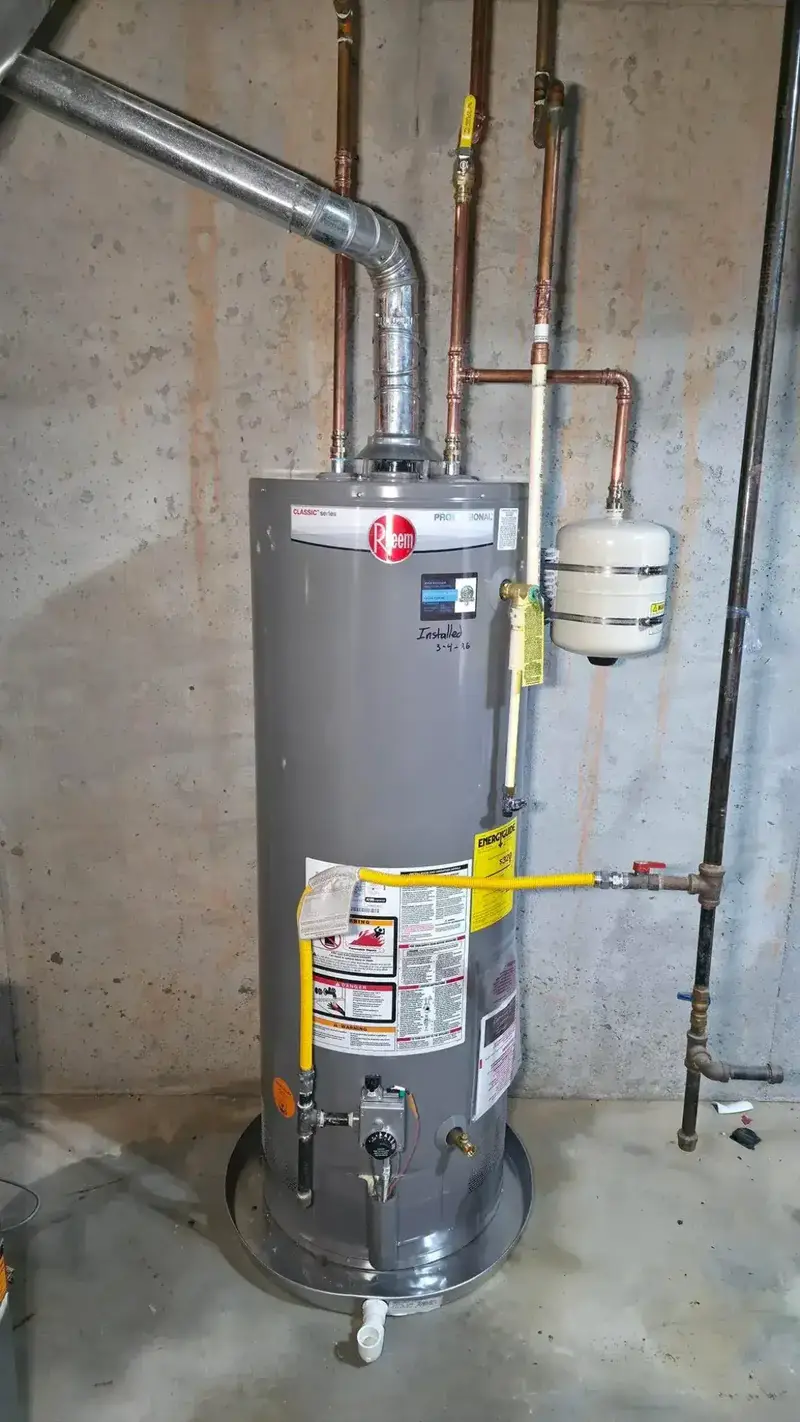
A tank water heater on a drain pan. Pipes, the gas line and the base of the tank are the first places to look when it starts making noise.
When Noise Means Call a Plumber
Water or rust at the base of the tank, or rust-colored hot water from the taps
Ryan checks the tank, tells you what he finds, and explains whether a flush, a part or a new heater makes sense. The estimate is free, there is no trip fee and no diagnostic fee, and you know the price before any work starts.
Repair, Flush or Replace?
Noise by itself is not a reason to replace a heater. A flush on a tank that is otherwise in good shape often quiets it. A tank that is old, has been leaking, or has a stubborn hardened layer is a different conversation. Water heater repair and replacement jobs typically run about $500 to $2,000 depending on the unit and the job, and the estimate comes free before any work. You can read more about the full service on the water heater repair and installation page.
If you are leaning toward a new unit, the tankless versus tank guide for mountain homes lays out the trade-offs. A tankless unit has no tank for sediment to sit in, but it has its own noises and its own need for scale care.
"Ryan was knowledgeable, courteous, and took the time to explain the issue and the best solution. What impressed me the most was their honesty and fair pricing, no hidden fees or unnecessary upsells." Cassie E., May 2025, Google review
To keep the noise from coming back, the water heater maintenance checklist covers the yearly flush and the other small jobs that add years to a tank.
Questions About a Noisy Water Heater
Is a popping water heater dangerous?
Usually it is not an emergency. Popping most often means sediment on the bottom of the tank. It still needs attention, because sediment makes the heater work harder and wears the tank. It becomes urgent if you see water around the tank, rusty hot water, or a relief valve that is dripping or spitting.
Why is my water heater rumbling when it heats?
Rumbling is the same sediment story as popping. Water trapped under the layer on the bottom boils and the steam bubbles force their way up. A flush is the usual first step. If the sound does not change after a flush, the layer may have hardened and need a plumber.
Can I flush the water heater myself?
Many homeowners do. Turn off the gas or the power first, connect a hose to the drain valve, and drain to a safe spot. The water is hot enough to scald. If the drain valve is stuck or clogs, stop and call instead of forcing it.
Why does my water heater bang when I turn off a faucet?
That is usually water hammer. Moving water stops suddenly at a closed valve and the pipes knock. It is a plumbing issue in the supply lines, not a failing heater, and a plumber can fix it with a water hammer arrestor.
Does a noisy tank mean I need a new water heater?
Not by itself. A flush often quiets a tank that is otherwise sound. Replacement makes sense when the tank is old, leaking or rusting. Ryan gives a free estimate and tells you which one fits your heater.
Do tankless water heaters make noise?
They can. Tankless units have no tank for sediment, but scale on the heat exchanger and a blocked vent or fan can cause rumbling or whistling. See the page on a tankless water heater not heating for the common causes.